Showing posts with label inflation. Show all posts

Tuesday, 24 April 2012

Impact of minimum wage policy from an economics perspective


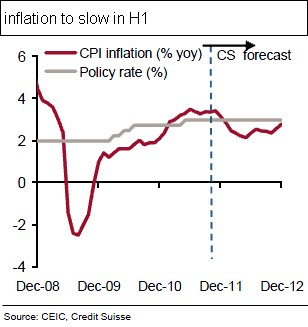
Continue from previous post on "New Minimum Wage Policy", here we analyze the impact from an economics perspective. Many people said the new policy will jack-up the inflation figures due to higher production costs. Subsequently, it will dampen the GDP growth numbers. Is it true?


The impact on inflation and GDP growth is ambiguous. Setting a minimum wage would boost wages and consumption for workers who remain employed (likely to be the more productive workers, working in companies that have higher profit margin), but would hurt the profitability of businesses that are labor intensive and could potentially lead to higher unemployment rate.


The impact on growth will likely be a net negative in the short-run as it might result in raised cost without an increase in productivity. In the long-run, this policy may bring about a positive impact if it succeeds in encouraging workers to upgrade their skills or for companies to invest more capital to boost productivity.

From an economic standpoint, the minimum wage policy is not the best way to help the lower income households. A gradual phase-in of the minimum wage should help reduce some of the negative impact.

Unless the introduction of the minimum wage policy leads to a widespread upward adjustment in wages, there shouldn't be a significant impact on inflation.


Some SMEs claim that a minimum wage would bankrupt small firms which rely on cheap labor, from Indonesia, Myanmar and Bangladesh. The Malaysian Federation of Employers, whose members collectively hire 2 million workers, said it wants an exemption for the smallest employers and for the policy to be implemented over several years. Ex-PM Mahathir Mohd, who is very influential in the political scene, is also against the minimum wage policy as he believes that it would hurt Malaysia’s competitiveness, especially during economic challenging times.


Source: Credit Suissue report dated 19th March 2012

Monday, 23 April 2012

Minimum Wage Policy: Pain for SMEs?

Malaysia Prime Minister promised that there will be an important announcement on 1 May 2012 (Labor Day). Without much thought, it's very obvious that it was closely related to "Minimum Wage Policy" which already echoed by Government to win the heart of public. However, it receives much objections from private sectors, especially small-and-medium enterprises (SME) claiming that the new policy would impact on their balance sheets drastically. Really?


Impact of a minimum wage policy
As pressure mounts on the government to ensure that private sector workers in Malaysia earn salaries above the poverty level of RM760, Malaysia could set the minimum wage at RM900 for Peninsular Malaysia and RM800 for East Malaysia. According to World Bank, Malaysia's wages have risen by a CAGR of 2.6% over the past 10 years, while inflation has risen at a higher pace of 3.0-3.5%.


Source: Department of Statistics, Malaysia

Who is the BIG winner?
The new policy would benefit some 3.2million workers or about 1/4 of Malaysia's workforce. It was believe that foreign workers would also enjoy a minimum wage salary. Obviously, foreign workers could be the biggest beneficiaries, as they are the most likely group of workers who are currently paid below the proposed minimum wage levels.

Which Sectors could be the Worst hit?
According to MIER, the sectors which have the highest percentage of workers in the lower income bracket are listed below. This is no surprise as these industries have the highest proportion of foreign labor.

  • Manufacturing (e.g. glove, food, wood-related and electronics)
  • Retail (e.g. department stores and supermarkets)
  • Hotel, F&B (e.g. restaurants, hawker centers and small eateries)
  • Security and Landscape
  • Agriculture including plantations, aquaculture and fishing industries

However, it was understand that the MNCs such as Nestle, AEON, Guinness and Carlsberg are already paying their general workers above the minimum wage levels. Meanwhile, local SMEs or manufacturing entities which rely heavily on foreign workers would be worst hit, such as Top Glove, Supermax and The Store, especially if they do not have pricing power to pass on the increased wage cost to their buyers. But, the graph below shows that Top Glove and Supermax may not be badly hit as mentioned above, due to its low weightage of cost on labor.


How about Palm Oil sector?
Luckily, the palm oil industry which rely heavily on foreign workers (1/3 of field workers), had already adjusted the salaries of their workers in 2011. So, it may not be as badly hit as the other sectors.

Next post, we look at the impact of the policy from an economies perspective. Stay tune.
Share this out if you felt that the info here is good for Malaysians. Thanks for your support.

Source: Credit Suisse, TA Research, Bloomberg, MIER

Thursday, 22 March 2012

Summary of 2011 Bank Negara Malaysia Annual Report

The global economy grew at a more moderate pace in 2011 after the strong rebound in 2010. The growth momentum was weighed down by continued structural weaknesses and fiscal issues in the advanced economies, geopolitical developments in the Middle East and North Africa region and the disruptive impact of natural disasters on global manufacturing production. These developments reverberated onto international financial markets and contributed to heightened market volatility throughout the year.


Despite the less favourable external environment, emerging economies continued to record firm domestic-driven economic growth. At the same time, emerging economies faced increasing challenges from volatile capital flows and rising inflationary pressures. Amidst this environment, the Malaysian economy continued to grow steadily underpinned by the expansion in domestic activity and firm regional demand.

The Malaysian Economy in 2011
The Malaysian economy recorded a steady pace of growth of 5.1% in 2011 (2010: 7.2%), despite the challenging international economic environment. Growth was lower in the first half of the year, particularly in the second quarter, as the economy was affected by the overall weakness in the advanced economies and the disruptions in the global manufacturing supply chain arising from the natural disaster in Japan. Although the global economic environment became increasingly more challenging and uncertain in the second half-year, Malaysia’s economic growth improved due to stronger domestic demand.


Outlook for the Malaysian Economy in 2012

  • Malaysia’s economy is projected to experience a steady pace of growth of 4 – 5% in 2012
  • Domestic demand to remain resilient
  • 2012 Budget expected to provide support to private consumption
  • Upward revision of public sector wages and one-off financial assistance to low and middle-income groups
  • Ongoing implementation of projects under ETP
  • Higher capital expenditure by both the Federal Government and the non-financial public enterprises
  • Implementation of the Special Stimulus Package through Private Financing Initiative


Labour market conditions are expected to soften in 2012 amid the slower economic activity. The unemployment rate is projected to increase to 3.2% of the labour force in 2012. Headline inflation is expected to moderate in 2012, averaging between 2.5 – 3.0%. The lower inflation projection reflects the moderation in global commodity prices and a more modest growth in domestic demand.

Source: BNM report

Tuesday, 17 January 2012

Credit Suisse's 2012 Malaysia Outlook

After looking into all those research reports on 2012 market outlook by local securities or research houses, it's time for foreign research houses. In this series of 2012 outlook, we kick start with Credit Suisse's report, in which a section of it was written specifically on Malaysia. And, below is the excerpt from it.


Malaysia’s GDP growth to outperform its regional peers'?
Real GDP growth expanded 5.8% yoy in Q3, led by strong private consumption (7.4% yoy) and fixed investment (6.1% yoy), and a surge in government consumption (21.8% yoy). On a seasonally adjusted basis, we estimate that GDP expanded 4.6% qoq annualized in Q3, stronger than that of Korea, Thailand, Singapore, the  Philippines, Hong Kong, and Taiwan. Malaysia remains highly exposed to a sharp slowdown in the developed world, but, on a relative basis, we think its domestic demand will hold up better than that of the other small open economies in the region. We expect private consumption growth to remain robust, partly due to high palm oil prices. In addition, fiscal spending from the government should continue to help boost spending in the next few quarters. We think there is upside risk to our 2011 real GDP growth forecast of 4.6%. Our 2012 GDP growth forecast remains unchanged at 4.8%.


Fiscal boost ahead of the next general election?

With revenues coming in much higher than budgeted this year as well as the backloading of the planned expenditure, the government has room to boost spending in the next few quarters. The
government spent RM154bn in the first three quarters of the year. Its revised 2011 budget suggests that it plans to spend another RM76.8bn (9% of GDP) in Q4, which is 20% yoy more than it spent in Q4 last year. Moreover, in its 2012 budget, the government announced one-off cash transfers to the poor, bonus payments and pay rises for civil servants, as well as various tax exemptions. Most of these are scheduled to happen in early 2012, which should provide a boost to sentiment and private consumption. The ‘people friendly’ budget suggests that the general election, which needs to be held by March 2013, might be near. We expect the government to continue to pump prime the economy before the next general election.


The result of the general election will determine the prospects for structural reforms. The government announced in the budget speech that it will liberalize another 17 services sub-sectors in 2012, including medical, architectural, engineering, accounting, legal, education and telecommunications services. However, there has been no news on subsidy reform or the goods and services tax. We think Malaysia has made some progress in its reforms, as reflected in improved rankings in the global competitiveness index (calculated by the World Economic Forum) and ease of doing business survey (published by the World Bank). However, the less popular reforms have been postponed and appear unlikely to happen before the general election. Its ranking on Transparency International’s Corruption Perceptions Index has also slipped in recent years. Our base case scenario is that Prime Minister Najib will win the general election, but fall short of regaining the two-thirds majority lost in the last general election. The quality of the win will determine whether Najib will stay as prime minister and gain
enough support to push through further changes, in our view.


Monetary policy to stay defensive

With risks surrounding the euro zone remaining high and inflation likely to fall below 3% yoy in Q1 2012, we think BNM will remain data dependent and be ready to cut the policy rate if needed. Our forecast suggests BNM will keep the policy rate on hold until end-2012. However, if the global growth outlook deteriorates in the coming months, we think BNM has both the scope and willingness to cut the policy rate. Similarly, we think the ringgit will continue to trade in line with its regional peers in the near term. However, we think BNM might allow some ringgit out-performance if and when the euro zone situation stabilizes, given that Malaysia’s current account surplus remains strong, domestic demand resilient, and there are signs of pick-up in US economic activity. Domestically, the election result should also be an important determinant of capital flows. A poor outcome for the ruling party could lead to heightened political uncertainty and capital outflows.

Source: Credit Suisse

Tuesday, 27 December 2011

CIMB: Domestic Drivers to steady the ship in 2012

CIMB research remain cautious on Malaysia's growth outlook for 2012 as several factors will put the brakes on growth - slower export growth due to the fragile western economies as well as slower consumption and investment growth due to heightened uncertainty and volatile financial markets. The implementation of ETP and stimulus measures cannot take up all the slack left by weak exports.

Slowing growth, rising risks
We expect GDP growth to slow to 3.8% in 2012 from an estimated 5% in 2011. The factors that shape the prognosis are:

  1. continuing weak global growth, pressured by volatile financial markets and Europe's sovereign debt worries;
  2. a downturn in Malaysia's export cycle;
  3. an expected slowing of consumption and investment due to worries over economic conditions

What to expect in 2012?
While not forecasting a global recession, a combination of fiscal tightening and a potential bigger financial shock from the debt crisis are expected to result in weaker global growth in 2012.

  1. Limited growth for the US economy. Its recovery is fragile and could succumb to any big external shocks, especially from Europe. This could lead to a double-dip recession. The sluggish recovery of the labor market as well as housing deflation will dampen household spending.
  2. The Eurozone is already in recession in 4Q11 and this will persist in 2012 as the persistent sovereign debt worries, volatility in financial markets and fiscal austerity will weigh significantly on growth. These braking factors will certainly raise the risk of more severe deleveraging, credit contraction and economic drag as the negative feedback loop between the banking system and the real economy becomes entrenched.
  3. China and India to continue growing, albeit at a slower pace due to the laggard impact of monetary tightening measures as well as a less favourable external environment. There are still fears of a hard landing for China.


Domestic demand cushions against weaker exports
With the export engine throwing a spanner in the works, the pressure is on domestic demand to keep the economy going, underpinned by both private spending and public investment. The key drivers of consumer spending are stable income and favorable employment prospects. But concerns over weaker growth prospects and volatile stock markets will bite into discretionary spending. Also, global uncertainties will throw a damper over the investment activity.

Macroeconomic policies: What to expect?
For 2012, the government is not straying from its path of fiscal sustainability as it targets to bring down the budget deficit from 5.4% of GDP in 2011 to 4.7%. The high level of debt constrains the government's ability to take on additional risk on its balance sheet. If the country does not commit to a credible fiscal reduction plan, it runs the risk of a downgrade of its credit rating in the event of a major change that pushes the fiscal deficit off track.


Monetary policy will continue to support activity
There is still a risk of food inflation. For 2012, inflation was expected to moderate to estimated 2.2% due to:

  1. weaker economic growth;
  2. easing commodity prices;
  3. a high base due to the fuel and sugar price hikes in 1H11

Persistent growth concerns, both global and domestic, coupled with expectations of easing inflationary pressures will enable the central bank to maintain an accomodative monetary policy. The tone of its policy statement on 11 Nov 11 suggests that growth is more of a worry than inflation, signalling the central bank's readiness to reverse its monetary course if domestic conditions deteriorate. An early rate cut in 1Q12 is still a possibility and end-2012 OPR to be targeted at 2.50-2.75% (3% at end-2011).

Source: CIMB Research

Tuesday, 6 September 2011

How to invest during HIGH Inflation era? (Sept 2011)

What is the main risk for Asian economy? None other than Inflation. Across the region, fast-growing countries such as Singapore, Indonesia, India and China are reporting faster than expected price increases in tandem with their economic success.


To fight inflation, many countries already carried out their tools of tightening. We have Singapore who fights imported inflation via stronger currency. Meanwhile, other countries are going for the traditional way of hiking interest rate and increasing bank reserve requirement since last year. At first, Bank Negara Malaysia called it as "normalization", but it seems to be "containerization" going forward to contain inflation.

Who's fault?

There are 2 causes for the problem, which I categorized them into international and national. Among the international contributing factors were:
  1. Loose monetary policies practiced by US and Europe, who slashes interest rate to almost zero and carried out large scale of asset purchases. Yet, it failed to rejuvenate a sustainable economy.
  2. As a result, these easy-money flushing into Asia in search of higher returns is fueling asset bubbles here. Then, we raised interest rates, and this had lured even more money into Asia together with an even stronger currency.
  3. Other then equity, easy-money also flown to Commodity markets, including food staples and basic materials. Also, searching for higher return in view of greater demand by Asian countries to produce or consume more. This had pushed up inflation.

In the other end, we have National factors such as:
  1. Consumer spending has risen much faster than supply. This is very obvious in populated countries such as China, India and Indonesia.
  2. While western countries facing high unemployment rate, our side is not only hiring, but increasing wages too. Hong Kong and Malaysia are implementing a minimum wage for the first time. Thailand is the next to follow. Who is going to absorb the higher wages? Definitely not companies, it's consumers.


So, how to invest during high-inflation era?
Equities. Although higher inflation did not bode well for the economy, but, the revenue and earnings of companies shown in the balance sheet is greater. In other words, inflation can show up in earnings growth for some companies. To protect our investment, we should select those companies that have sufficient pricing power to pass on the additional cost to end clients.

Tuesday, 28 June 2011

New Fund: OSK-UOB Capital Protected Dual Opportunities Fund

While inflation fears in China is a dominant factor, signs that China's growth is holding up well despite this concern will certainly fuel further growth. Traditionally in China, a higher inflation tends to exhibit a positive correlation with Chinese companies price-earnings ratios and nominal earnings growth. Having said that, the consensus view is that the government will raise borrowing costs to contain inflation and prevent the economy from overheating.
With such growth euphoria and inflationary concern, a new fund is structured to take advantage of the current inflationary economy in China. This is a 4-year close-ended capital protected* fund which aims to provide income and capital appreciation over the medium term whilst protecting investors’ capital* on the Maturity Date.

Where is the Fund's return comes from?

The Hong Kong (HK) Option is designed to provide investors with potential annual coupon payments that are based on the performance of Chinese companies’ stocks and potential returns from its exposure to a gold investment at Maturity Date. Hence, the Fund’s name “Dual Opportunities” reflects the two opportunities available under the HK Option.

The HK Option is denominated in US Dollars and thus, the Fund’s return from the HK Option is subject to US Dollars / Ringgit Malaysia exchange rate risk. The Fund has 100% participation in the HK Option payout. The HK Option will provide the Fund with exposure to the performance of a fixed basket of 5 Chinese companies’ stocks listed on the Hong Kong Stock Exchange (“Underlying”).

However, the performance of each of these stocks under the HK Option is capped at 8% per annum. The final Underlying which will always be comprised of 5 stocks will be determined on the Commencement Date of the Fund.

The HK Option will pay the Fund a potential annual coupon payment that is based on the performance of a basket of 5 Chinese companies’ stocks which are expected to perform during this inflationary period.

In addition to the performance of the Underlying, the HK Option is also structured to pay a gold return, if any, at the Maturity Date. The HK Option’s exposure to gold return would depend on the annual performance of the Underlying and also on the performance of gold prices between the Commencement Date and the Maturity Date.

Indicative Asset Allocation of the Fund

The Fund is suitable for investors who:
  • have a low risk tolerance;
  • seek capital protection;
  • have a positive outlook on China's growth potential;
  • have a positive outlook for gold prices;
  • have a medium term horizon and seek regular income.

Source: OSK-UOB Investment Management


Sunday, 15 May 2011

3 Hints given by BNM (16 May 2011)

Bank Negara Malaysia (BNM) hiked the OPR by 25bps to 3% on 5 May as what some analysts said "Surprising". The OPR hike was a pre-emptive strike on inflation pressures as the output gap closes. Many analysts are expecting hikes to resume only in July as inflation remains largely supply side driven. However, BNM seems to act before demand pull pressures dominate and before the output gap turns positive. In our view, the OPR and SRR hike is indicating two things here.


Hints #1
Inflation is going to threaten the Malaysian economy in the near-term (at least). Recent increase in prices of petrol and sugar will further accelerate the numbers. With ongoing efforts by Government to reduce the subsidies, inflation numbers for sure will gone up.

Citi Research: Regional Policy Rates as at 10th May 2011

Hints #2
Related to inflation also, BNM is trying to reduce the increasing food and resources prices. If we can reduce the import price, by having a stronger currency, this would be a wise move. So, BNM is trying hard to cramp down our money spent on these import items. Not by reducing the quantity of imports, Malaysia are buying at a cheaper price. How to that? Of course, by raising the OPR rates, which will lead to a stronger currency RM.

Citi: Regional Currency Performances as at 10th May 2011
Hints #3
Maybe, BNM foresees that Malaysia economy is going to face some real challenges (Asian financial crisis?). If the situation really turns bad in a year or two, how are we going to reduce the rate to spur economy given the current low rates? We must have room for BNM to decrease the rate by that time. That's why BNM so pro-active now?

Thursday, 27 January 2011

Extractions from BNM monetary policy statement

As expected, Bank Negara Malaysia (BNM) decided to maintain the Overnight Policy Rate (OPR) at 2.75% yesterday. This was the 3rd time in a row that BNM left it unchanged. Are there any hints by BNM on Malaysia's economy this year? We can explore the "hidden messages" from the monetary policy statement as below:


Regional Front:
  • While advanced economies continue to register modest growth, most emerging economies have experienced strong growth.
  • For Asian region, domestic economic activity continues to support the growth momentum amid weaker external demand.
  • Shifts in global liquidity have resulted in significant capital flows into the emerging economies, in particular, Asian region, and have brought with it risks to macroeconomic and financial stability.
  • The region is also being affected by global inflationary pressure arising from the higher commodity and food prices.
On Malaysia:
  • Recent indicators point towards a sustained expansion in private sector activity.
  • External demand, however, was affected by the slower global growth.
  • Malaysian economy is expected to grow at a steady pace in 2011, underpinned by continue firm expansion in domestic demand.
  • Private consumption will be supported by sustained employment and income growth.
  • Private investment activity will be supported by domestic-oriented sectors and the expansion of new growth industries.
 On Inflation:
  • Domestic headline inflation rose towards the end of 2010 albeit remained low at 2.2%.
  • The increased was mainly on account of higher food and energy prices.
  • Prices are expected to increase at a modest pace in the coming months, driven primarily by rising global commodity and food prices.
  • The assessment is that inflation will continue to be driven by supply factors with limited evidence of excess demand exerting pressure on prices.

BNM Conclusions:
  • BNM considers the current monetary policy stance as appropriate and consistent with current assessment of the economic growth and inflation prospects.
  • The stance continues to remain accommodative and supportive of economic growth.
  • Going forward, additional policy tools such as the statutory reserve requirement (SRR) and macro-prudential lending measures may be considered to avoid the risks of macroeconomic and financial imbalances.
Finance Malaysia view:
  • We expected inflation to rise at a faster pace in 2011
  • BNM to continue hiking interest rate in second-half 2011
  • OPR potentially be raised by 50-75 basis points to 3.25-3.50%
  • Bank's loan growth will slow if SRR was raised
Source: BNM website

For full BNM monetary policy statement, click here.


Related posts:
70% Loan to Value
How BNM OPR hiking affecting the market?

Tuesday, 25 January 2011

New Fund: CIMB-Principal Strategic Income Bond Fund

Post-financial crisis, bonds remain the preferred asset class for more conservative investors because it is less volatile than equities. Asia, for example, remains a sound investment destination with rapid urbanization as a younger and higher population growth will necessitate greater infrastructure spending in the coming years.


To provides the golden opportunity, CIMB-Principal Asset Management Bhd has launched a new fund, that allows investors to capitalise on Asia, Australia, New Zealand and Middle East's improving credit conditions given the high potential of more rating upgrades.

"The demand for high-quality bonds in these targeted countries continues to remain high given the low interest rates outlook in the US and Europe, and this should support bond prices for the next few years. In addition, the slower economic recovery of these developed markets is shifting investment appetite to Asia. Combined with the likelihood of bond rating upgrades, this will mean potential good returns for investors who want to invest in regional high growth prospects in a stable manner." said Campbell Tupling, chief executive of CIMB-Principal Asset Management.

More about the fund....

This is a close-ended fund that aims to provide regular income and capital preservation through investments in predominantly bonds and other fixed and floating rate securities.

What's the strategy?
Generally, the fund adopts a buy-and-hold strategy by investing 70%-90% of its NAV in a diversified portfolio of bonds and other fixed and floating rate securities issued by governments, government agencies, supranational organizations and corporate issuers. The fund may also invest in structured products and/or derivatives, in which the underlying are linked to the above mentioned securities.

What's the bonds/securities rating you're looking at?
The fund may invest in investment grade securities and high yield securities, subject to a maximum 40% of its NAV in securities rated below "Baa" by Moody's or equivalent rated by S&P and Fitch.

The fund is suitable for investors who:
  • have 3 years investment goals
  • are not planning to have access to their money in the next 3 years
  • are seeking exposure to investment opportunities in fixed income securities
Source: CIMB-Principal
Click here to download prospectus
 
Related post:

Wednesday, 22 December 2010

Top 3 Commodity Picks for 2011

Forget about supply and demand issue of commodity, everyone knows the main mover now is Emerging Market, especially China. As long as US economy not yet recovered, China was expected to continue its great appetite to consume commodities globally. Not for its consumptions, but mainly because of China's currency management.


China, already the largest creditor of US by holding USD which was slipping with a series of quantitative easing programs, would definitely forced China to diversify its holding elsewhere. However, China would hand-picking according to its own local demand. As such, Finance Malaysia forecasts those commodities which were used heavily in construction, infrastructure, production will continue to perform in 2011.


Top pick #1: Palladium
One in four goods manufactured today either contain platinum group metals or the platinum group metals play a major role during their manufacturing process. Palladium was used in many electronics including computers, mobile phones, multi-layer ceramic capacitors, LCD televisions.

Top pick #2: Silver
Being a precious metal, silver is used to make ornaments, jewelry, high-value tableware, and  currency coins. Today, silver metal is also used in electrical contacts and conductors.

Top pick #3: Copper
About 98% of all copper is used as the metal, taking advantage of distinctive physical properties - being malleable and ductile, a good conductor of both heat and electricity, and being resistant to corrosion. It is widely used in piping for water supplies, refrigeration and air conditioning.


Wednesday, 20 October 2010

Why China raise interest rate? And, what's the effect?

Yesterday, China surprisingly raised its interest rate by 0.25% as follows:
- 1 year lending rate from 5.31% to 5.56%
- 1 year deposit rate from 2.25% to 2.50%

Why China raise interest rate?
1. To cool down the over-heating property sector.
2. Combat inflation
3. Low liquidity in the banking system

While inflation was hovering around 3.5% currently, even though the deposit rate has been raised, the net real interest rate is still in negative territory (3.5% - 2.5% = -1.0%). This is one of the main reason why Chinese were going all out to invests, especially in real-estate, due to its low yield if sitting in the bank (even lower than Malaysia).


However, China would be facing another problem...

Raising interest rate would attract capital inflows, which could dampen the purpose of containing inflation. Foreign investors view Chinese renmimbi as undervalue, mainly due to interventions by Chinese government. The latest news could ignite a fresh round of thoughts, worsening the current situation, pushing renmimbi higher and faster.

In fact, China should target it's main problem specifically - real estate. Inflation there is mainly caused by high flying properties prices. Hence, measure such as property gain tax should be introduced first, before raising interest rate, to avoid further attracting inflow of hot-money.

Affecting Malaysia?

Given that China is one of the largest trade partner with us, Malaysia could see a surge in capital inflow also. In fact, the whole region will experience the same fate of stronger currency, making our export to western countries more expensive. Anyway, I believe that we can offset the negative effect with China being the largest commodities / resources consumer, which supplied by Asian countries.