Showing posts with label Malaysia. Show all posts

Monday, 19 August 2013

Should or Would Government Privatizing MAS? (Aug 2013)

Both of our ex & current Prime Minister already voiced their views regarding this matter. Yesterday, our ex-PM said Government should SELL MAS if it can be run more effectively by private sector. Meanwhile, when asked, our current PM said there was no plan to privatize MAS now because it was on track to its turn around plan under the helm of new management. So?


In fact, this was like a million ringgit question for many speculative investors. Maybe, they or YOU were hoping for the deal to materialize if you bought the shares just recently. Anyway, it won't be as easy as you might think.

  1. MAS is a national carrier. It carries the national flag wherever it goes. (Some more, national day is approaching now)
  2. How much to privatized? Especially for a still loss-making company... Definitely, Government won't get much if MAS being privatized now.

However, everything is possible given the facts below:

  1. National company is just a company anyway. We have just witnessed the privatization of KTM, POS and PROTON few years back.
  2. Government's coffer is more important. You can't keeps on letting the pumping money to save a company. Why not let go the 'vampire' of money?


The score now is 2-2. Anything to add?
* Hint: RHB research puts in a target price of RM0.43 for MAS in its report dated 25th July 2013. It this was the offered price, would you satisfy?


Conclusion:
It depends on whom being asked this question. If posted to share investors, the answer would be YES because you most probably can profit from it (if higher premium was offered). However, the answer might be the opposite if posted to Government.

Friday, 15 March 2013

5 Things to Know before 13th General Election

Are you bored of the recent elections hoo-haa ? It's all coming from either party from different side, some NGOs, and some political related persons. How about foreigners? What are they thinking about our Malaysia General Election? Here you go...


In this note, Morgan Stanley outline the 5 things they think investors need to know regarding Malaysia elections:
  1. What's upcoming? Setting the context
    The 13th General Elections are due to be held very soon in Malayia. Parliament needs to be dissolved no later than April 2013, and elections need to be held no later than 60 days from date of its dissolution.

  2. Which are the key states to monitor?
    They are Kedah, Penang, Selangor, Perak, Johor, Sabah and Sarawak.
  3. Election scenarios and macro implications
    BN Parliamentary seat share of > 63% would be seen as a positive surprise for investors. BN Parliamentary seat share of < mid 50% would be seen as a negative risk event by investors and could have implications for leadership and government stability. The political landscape will determine momentum of reform agenda.
  4. Policy comparison: Pakatan Rakyat (PR) vs Barisan Nasional (BN)
    The broad economic thrust of PR policy is fairly similar to that of BN. However, PR campaign proposals have a more leftist slant and also focus on policy devolvement to state governments, more geographically balanced economic development, and strengthening of decentralization in Sabah and Sarawak.
  5. What to expect in UMNO Party elections?
    UMNO elections have to be held by Jun-2013. The president of UNMO is historically the prime minister, and hence, this will determine whether there is leadership stability. Forthcoming elections will take place amid constitutional amendments which makes the process more democratic.


* NO abusive comments were allowed. Thanks.


Source: Morgan Stanley research report dated 18th Feb 2013

Wednesday, 16 January 2013

TA 2013 Malaysia Outlook: Ride the Volatility

By TA Securities,

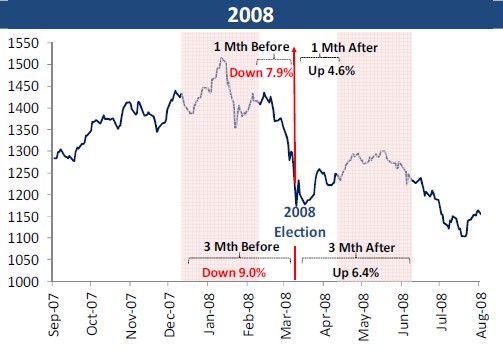
We believe 1H13 will be a choppy period and election concerns could drag down the FBM KLCI by 8% to 10% in the period before market rebounds in the 2H13. The impetus for revival will mainly hinge on the end of election overhang and strong domestic demand.


Sustained monetary easing on the back of low inflationary pressure and attempts to reduce budget deficits by cutting subsidies and channeling the savings to productive ventures are positive despite the short-term impact on earnings. Overall, domestic economy will play an integral role in sustaining confidence in domestic equities next year in the absence of any overwhelming micro drivers.


Corporate earnings for 9M12 were less robust and we forecast full year earnings growth for the FBM KLCI to be 9.4% only. Chances of a strong revival in the immediate-term are minimal based on external sentiment and dwindling demand in key export markets. Our earnings growth forecast of 8% and 8.4% for CY13 and CY14 is not compelling vis-a-vis key regional emerging market's 16.1% and 14.7% respectively. It could come under further pressure if the implementation of minimum wages had greater impact in raising the input cost than the intended increase in disposable income and spending. High likelihood of subsidy cuts (electricity tariff and fuel price increases) post 13th General Election would be negative on earnings and will prompt us to trim our CY13 and CY14 forecasts by 1.2% and 4.9% respectively.


How about Foreign Markets?
External factors will continue to dictate the market directions. The structural flaws cannot be undone overnight but expect bouts of positive improvements to kick in the 2H13 as fats are trimmed and jobs created. China could revive its domestic growth without stoking inflationary pressure but it can be destabilizing factor if its row with Japan escalates. The same applies to Iran and the West.

Can KLCI end Strong this year?
We derived our end-2013 target of 1,710 for FBM KLCI after applying 2008-2011 average forward PER of 14.3x on mid-cycle EPF of 120 sen. The underlying key assumption is that BN will return to power with slim majority. This target is a 5% discount to our bottom-up valuation of 1,800.

FBM KLCI performance before and after 2008 Malaysia's election
Strategy...
Sell-on-strength, especially overvalued defensive plays in the Consumer, Healthcare and Telco sectors and turn cash-heavy to accumulate high beta plays in domestic sectors, which are mainly related to Construction, Oil & Gas and Property sectors, in 1H13. Banking sector holds good buys based on their attractive valuation, still robust loan growth and bright chances of benefiting from ongoing domestic expansions.


Source: TA securities report

Monday, 8 October 2012

RHBRI Market Outlook & Strategy 4Q2012: Stormier Outlook


RHB research institute (RHBRI) is of the view that it could still be a choppy few months for the equity market in the 4Q given weakening economic fundamentals in the major world economies and fears of an imminent general election on the home front. Whilst more rounds of quantitative easing have been unveiled in the developed world, the big question in investors’ minds is how all these quantitative easing measures will translate to better global economic outlook. Having said that, equity still stands up vis-a-vis the unappealing returns of the alternative asset classes, such as cash and bonds and any good news is still likely to prompt a rally in equities.


How was Malaysia fared?
And, what's the strategy now?
Thus far, Malaysia has fared relatively well in the global financial crisis, and this is partly on account of low reliance on foreign funding of its banking system and more importantly, the progress in the implementation of the Economic Transformation Programme to boost domestic demand and cushion the economy against the downside risk from the external sector. As a result, the economy has bucked the trend and its real GDP growth is projected to pick up to +5.4% in 2013, from +5.0% estimated for 2012. This will translate to sustained earnings growth of around 6.0% in 2013 to create new shareholders’ values for investors.


We believe after a phase of correction and consolidation, the market will come back as the huge bond purchase programmes in the Eurozone and the US will push investors out of low-yielding cash and bonds over time into riskier assets such as equities. As the general election could be delayed to March 2013, our end-2012 FBM KLCI target remains unchanged at 1,690. Assuming global situations stabilize in six to nine months time and the global economic recovery is intact, our end-2013 FBM KLCI target is 1,815, based on 15x 2014 earnings.


Whilst our core strategy remains defensive, we believe investors would still need to accumulate fundamentally-robust stocks on weakness in order to outperform the market. In addition, as the search for yield will likely remain a key driver for both retail and institutional investors in the 4Q, high divided-yielding stocks will also continue to outperform the market, in our view. Sector-wise, our key overweight are telecommunications and banking, although we also have an overweight stance on the utilities and healthcare sectors.


Source: RHBRI research report

Wednesday, 3 October 2012

Budget 2013: What's the view by Foreign research houses?

Hmmm... Yup, the title is correct. We at Finance Malaysia blog would like to hear the views from Foreign analysts only this time. Why? Because they tend to be more independent (we think), and we know that readers like you can easily access to local research reports. So, we made the decision to only show you what is written by foreign analysts as below:


Phillip Capital Management: An earnest & all-around Budget?


"People’s livelihood, affordable housing and tax issues topped the pre-budget wish lists. Weeks before the announcement, there were many discussions about the Budget 2013 in the media and various conjectures about the budget outcome. Everybody in town was anxiously waiting for the Prime Minister’s speech to reveal the Budget 2013, hoping the wish in one’s heart and mind will come true. TV camera shots have shown that people have been in high spirits cheering for the Santa Claus during the speech. We think Barisan Nasional has successfully drawn up the budget that appears to benefit the majority of people especially the middle-income segment just to keep in voters’ good graces.

However, off the radar of the camera shots, people are debating about the fiscal deficit that has been running for the 15th straight year and the high level of government debts which is approaching 55% to GDP. People expect their money to be used more efficiently to improving the competitive landscape, cutting wastage and leakage, commitment towards more R&D. Although Budget 2013 will bring down the fiscal deficit to 4% of GDP and disclosed that the deficit will continue to narrow to 3% by 2015, people still question if the budget is drafted in earnest. Only time will tell!

Overall, we think there is no big surprise from the Budget 2013 and will not have big impact to the market. However, there are some sectors that will benefit and should get some boosts from the budget such as consumer, construction and oil & gas."


UOB Kay Hian: Reining In Spending...

"The market-neutral Budget 2013 again reaches out to the lower to lower-middle income segments with cash handouts and a cut in tax rates, but reins in the overall deficit with marginally lower government expenditure. Highlights include the establishment of business trusts, a modest real property gain tax (RPGT) hike, and incentives for the oil & gas (O&G) sector. Potential winners are beneficiaries of business trust structures that enable cash distributions, such as BToto and DiGi, selected consumer stocks, particularly BAT (no duty hike), as well as micro-lending institutions like RCE and MBSB, while minor losers are high-end property developers due to modest RPGT rate hikes.


Promoting the establishment of business trusts... A key proposal of Budget 2013 is the establishment of business trusts which add vitality to the capital market (hence making Bursa a minor beneficiary), but more importantly allow a handful of local companies to optimise their capital structure and distribute surplus cash. Potential beneficiaries are cash flow-rich companies with suboptimal capital structures (cash-rich or under-leveraged) that are constrained by a lack of shareholder reserves.


…and O&G investments, which include a 10-year 100% Investment Tax Allowance for investments in refinery activities with regard to petroleum products, and an enhanced 100% income tax exemption on statutory income for the first three years of operations for liquefied natural gas (LNG) trading companies under the Global Incentive for Trading (GIFT) programme.


Strategy: We continue to advocate a defensive strategy amid a peakish market, cautious external outlook and a potentially early general election (GE13). Thematically, we like:
  1. beneficiaries of business trust creation,
  2. in the O&G sector, beneficiaries of rising exploration and production (E&P) activities, such as Perisai, and significant property owners at Pengerang, and
  3. selected beneficiaries in various iconic government developments – Iskandar Malaysia and Tun Razak Exchange (TRX).


Our key top picks are BToto, DiGi, Gamuda and SapuraKencana. Smaller-cap favourites include MPHB, Perisai, Top Glove and Tradewinds Plantation while MRCB is a key situational stock. Meanwhile, we have upgraded BAT to HOLD (target price raised to RM57.70 from RM49.00) as we now foresee a rising momentum in volume recovery without a duty hike."

Saturday, 29 September 2012

Budget 2013: Election or Rakyat centric?

General election is around the corner. External environment was not so promising, following the no ending of European debt crisis, world economic slowdown, and recent tension between China and Japan. I believe all of these would be some key factors being taking into consideration to formulate the Malaysia Budget 2013.


Goodies? Bonus? Cash handout?
Themed as "Prospering The Nation, Enhancing Well-Being of the Rakyat: A Promise Fulfilled". Our prime minister, who is also Finance Minister, tabled the 2013 Budget at Dewan Rakyat yesterday. Over here, Finance Malaysia blog would only touches on some key points:
  • Economic growth projected to expand between 4.5% - 5.5%
  • Federal Government's revenue in 2013 is estimated to increase to RM208.6 billion
  • Continuation of BR1M of RM500 to households earning not more than RM3,000 a month and also extended the aid to cover a payment of RM250 for single unmarried individuals aged 21 and above, earnings not more than RM2,000 a month
  • RM 16 million a year group insurance scheme for registered hawkers and small businesses for coverage of up to RM5,000
    • FM: Once again goodies were dished out to created a feel-good factor for govt and we doubted whether Msia could achieves the 4% budget deficit target in 2013. Anyway, govt could still succeed by increasing the revenue by using these goodies. How? Very simple, that's to entice the non-registered self-employed and businesses to registered so that they are accountable for their earnings.


Spurring retail bond/sukuk market:
  • DanaInfra Nasional Bhd to issue retail bonds worth RM300million by end-2012 to finance MRT development projects
  • Additional expenses incurred in issuance of retail bonds and retail sukuk to be given double deduction for a period of 4 years from YA2012 to YA2015
  • Individuals investors given stamp duty exemption on instruments relating to transactions of retail bonds and retail sukuk
    • FM: It's very clear and straight forward that the govt want to see the soon-to-be launched retail bond/sukuk market to prosper, thus, attracting more foreign funds to the country to make it more vibrant and liquid.
Youth-centric offers:
  • A one-off rebate of RM200 for the purchase of one unit of 3G smartphone from authorized dealers for youths aged between 21 to 30 years old with monthly income of RM3,000 and below.
  • PTPTN loans: 20% discount for full repayment of loan; 10% discount for regular repayment.
  • RM250 1Malaysia book voucher for students studying at institutions of higher learning
    • FM: It seems too good to be true for PTPTN borrowers. But, it was attractive for probably 1% of them only. Why? We must remember that they borrow because they doesn't have money in the first place, not because they want to leverage. Do you get my meaning? Or, does govt scared if opposition coalition will void all outstanding loans if they took over?
Addressing the skyrocketing property prices:
  • RM500 million by PR1MA to build 80,000 houses in major locations nationwide with selling price ranging between RM100,000 and RM400,000 per unit. Among the locations are KL, Shah Alam, JB, Seremban and Kuantan.
  • MyFirst Home Scheme will be enhanced by increasing the income limit for individual loans from RM3,000 to RM5,000 per month or joint loans of husband and wife of up to RM10,000 per month.
  • Real Property Gains Tax (RPGT) for properties disposed within 2 years will be taxed at 15% (up from 10%) and 10% for between 3rd to 5th year (up from 5%), whereas other term remained unchanged.
    • FM: For us, we think that 15% RPGT is still too low if compared to pre-2007, where RPGT for first 2 years disposal was as high as 30% and 25%. Meanwhile, MyFirst Home Scheme was very tough to get it, as far as we concerned. Once again, good luck to those potential property buyers.
Changes to personal income tax:
  • Individual income tax rate to be reduced by 1% for each grouped annual income tax exceeding RM2,500 and RM50,000.
  • Tax relief on children's higher education scheme (SPNN) increased to RM6,000 per person (from RM4,000 previously).
    • FM: The 1% tax reduction seems more effective to help out those mid-income earners, although it's not much. However, we are disappointed once again for the unchanged REITs withholding tax structure which makes M-REITs less attractive compared to regional REITs.
Government servants is the BIG winner AGAIN!!!
  • Minimum pension to be increased to RM820 for those who had served the govt for at least 25 years. More than 50,000 pensioners benefited.
  • 1.5 months bonus for civil servants.
    • FM: Well... Nothing much we can say about it. This is a govt budget. What's wrong if govt servants being the beneficiary? But, should it be again and again? Hmmm...

"Stocks-to-watch" for the coming Monday:
  • Genting, GENM, JTI, BAT on the surprise unchanged sin taxes
  • Construction companies on the River of Life projects, EPP projects and schools upgrade
  • Consumer related players on the expected extra spending by govt servants with bonuses
  • Low cost housing developers (etc. Hua Yang) for possible contracts by PR1MA
  • Financial institutions with investment banking arm for the launching of retail bond/sukuk market

Tuesday, 21 August 2012

What's wrong with Malaysia in terms of GDP per Capita? (2012)

Addressing the issue, which Finance Malaysia thinks was critical at a time of globalization heats up, Malaysia needs to formulate and take action immediately without much hesitation. But, before we jump into action, we need to know the root of the problem. Right?

Exactly, we must find out the reason why we left behind other countries in terms of GDP per capita, which refers to the country's gross domestic products at purchasing power parity (PPP) per capita. According to Wikipedia, it was the value of all final goods and services produced within a country in a given year divided by the average population for the same year.


Why not using nominal GDP to measure national wealth?
Comparison of national wealth are also frequently made on the basis of nominal GDP, which does not reflect differences in the cost of living. Using a PPP basis is arguably more useful when comparing generalized differences in living standards on the whole between nations because PPP takes into account the relative cost of living and the inflation rates of the countries, rather than using just exchange rates which may distort the real differences in income.


Singapore is now the richest country in the world.
Where is Malaysia?
According to sources, some of the factors contributing to Singapore's forecast performance are its 'human capital' -- a skilled and educated labour force, the dynamic business environment, openness to trade, capital mobility and foreign direct investment. Also, it is worth noting that there is a global eastwards shift in economic activity -- Singapore is perfectly positioned to take advantage of this.


However, everything is not going well for Malaysia, although we are Singapore's closest neighbour. In terms of GDP, we moving nowhere for past few years amid competitive global environment. But, in terms of population, we believe we accelerated for past one year after government legalized some 1.6million foreign unskilled labourers. Please noted that they are non-taxpayers who consume all the benefits funded by us Tax payers.

On the other side, our brightest and brilliant are forced to mass migrate to other countries. This is a fact which is dampening the future of our country. It's sad because Malaysia supposedly was high on the list in terms of GDP per capita, given the plenty of natural resources that we had and strategic position we located in. Why?

The main reason lies within us, Malaysians. Don't blame the government. Don't blame other countries. Don't blame the statistic. Just blame ourself, Malaysians. A government was formed by its own people, and elected by us. All the while, we have this wrong mentality that we are blessed with valuable resources which can last us for a long long time. Does that mean that we do not need to compete?

Facebooking is a new norm in workplace now.
If you were to ask, Finance Malaysia would take the blame on our mindset, especially youngsters nowadays. Most of them didn't bother about the country and their future. These people go to work for the sake of working only. They follow instructions, without reinventing the way we work. How are we going to excel? Don't even think about competing. It's about time to change for a better tomorrow.

Tuesday, 24 April 2012

Impact of minimum wage policy from an economics perspective


Continue from previous post on "New Minimum Wage Policy", here we analyze the impact from an economics perspective. Many people said the new policy will jack-up the inflation figures due to higher production costs. Subsequently, it will dampen the GDP growth numbers. Is it true?


The impact on inflation and GDP growth is ambiguous. Setting a minimum wage would boost wages and consumption for workers who remain employed (likely to be the more productive workers, working in companies that have higher profit margin), but would hurt the profitability of businesses that are labor intensive and could potentially lead to higher unemployment rate.


The impact on growth will likely be a net negative in the short-run as it might result in raised cost without an increase in productivity. In the long-run, this policy may bring about a positive impact if it succeeds in encouraging workers to upgrade their skills or for companies to invest more capital to boost productivity.

From an economic standpoint, the minimum wage policy is not the best way to help the lower income households. A gradual phase-in of the minimum wage should help reduce some of the negative impact.

Unless the introduction of the minimum wage policy leads to a widespread upward adjustment in wages, there shouldn't be a significant impact on inflation.


Some SMEs claim that a minimum wage would bankrupt small firms which rely on cheap labor, from Indonesia, Myanmar and Bangladesh. The Malaysian Federation of Employers, whose members collectively hire 2 million workers, said it wants an exemption for the smallest employers and for the policy to be implemented over several years. Ex-PM Mahathir Mohd, who is very influential in the political scene, is also against the minimum wage policy as he believes that it would hurt Malaysia’s competitiveness, especially during economic challenging times.


Source: Credit Suissue report dated 19th March 2012

Monday, 23 April 2012

Minimum Wage Policy: Pain for SMEs?

Malaysia Prime Minister promised that there will be an important announcement on 1 May 2012 (Labor Day). Without much thought, it's very obvious that it was closely related to "Minimum Wage Policy" which already echoed by Government to win the heart of public. However, it receives much objections from private sectors, especially small-and-medium enterprises (SME) claiming that the new policy would impact on their balance sheets drastically. Really?


Impact of a minimum wage policy
As pressure mounts on the government to ensure that private sector workers in Malaysia earn salaries above the poverty level of RM760, Malaysia could set the minimum wage at RM900 for Peninsular Malaysia and RM800 for East Malaysia. According to World Bank, Malaysia's wages have risen by a CAGR of 2.6% over the past 10 years, while inflation has risen at a higher pace of 3.0-3.5%.


Source: Department of Statistics, Malaysia

Who is the BIG winner?
The new policy would benefit some 3.2million workers or about 1/4 of Malaysia's workforce. It was believe that foreign workers would also enjoy a minimum wage salary. Obviously, foreign workers could be the biggest beneficiaries, as they are the most likely group of workers who are currently paid below the proposed minimum wage levels.

Which Sectors could be the Worst hit?
According to MIER, the sectors which have the highest percentage of workers in the lower income bracket are listed below. This is no surprise as these industries have the highest proportion of foreign labor.

  • Manufacturing (e.g. glove, food, wood-related and electronics)
  • Retail (e.g. department stores and supermarkets)
  • Hotel, F&B (e.g. restaurants, hawker centers and small eateries)
  • Security and Landscape
  • Agriculture including plantations, aquaculture and fishing industries

However, it was understand that the MNCs such as Nestle, AEON, Guinness and Carlsberg are already paying their general workers above the minimum wage levels. Meanwhile, local SMEs or manufacturing entities which rely heavily on foreign workers would be worst hit, such as Top Glove, Supermax and The Store, especially if they do not have pricing power to pass on the increased wage cost to their buyers. But, the graph below shows that Top Glove and Supermax may not be badly hit as mentioned above, due to its low weightage of cost on labor.


How about Palm Oil sector?
Luckily, the palm oil industry which rely heavily on foreign workers (1/3 of field workers), had already adjusted the salaries of their workers in 2011. So, it may not be as badly hit as the other sectors.

Next post, we look at the impact of the policy from an economies perspective. Stay tune.
Share this out if you felt that the info here is good for Malaysians. Thanks for your support.

Source: Credit Suisse, TA Research, Bloomberg, MIER

Thursday, 22 March 2012

Summary of 2011 Bank Negara Malaysia Annual Report

The global economy grew at a more moderate pace in 2011 after the strong rebound in 2010. The growth momentum was weighed down by continued structural weaknesses and fiscal issues in the advanced economies, geopolitical developments in the Middle East and North Africa region and the disruptive impact of natural disasters on global manufacturing production. These developments reverberated onto international financial markets and contributed to heightened market volatility throughout the year.


Despite the less favourable external environment, emerging economies continued to record firm domestic-driven economic growth. At the same time, emerging economies faced increasing challenges from volatile capital flows and rising inflationary pressures. Amidst this environment, the Malaysian economy continued to grow steadily underpinned by the expansion in domestic activity and firm regional demand.

The Malaysian Economy in 2011
The Malaysian economy recorded a steady pace of growth of 5.1% in 2011 (2010: 7.2%), despite the challenging international economic environment. Growth was lower in the first half of the year, particularly in the second quarter, as the economy was affected by the overall weakness in the advanced economies and the disruptions in the global manufacturing supply chain arising from the natural disaster in Japan. Although the global economic environment became increasingly more challenging and uncertain in the second half-year, Malaysia’s economic growth improved due to stronger domestic demand.


Outlook for the Malaysian Economy in 2012

  • Malaysia’s economy is projected to experience a steady pace of growth of 4 – 5% in 2012
  • Domestic demand to remain resilient
  • 2012 Budget expected to provide support to private consumption
  • Upward revision of public sector wages and one-off financial assistance to low and middle-income groups
  • Ongoing implementation of projects under ETP
  • Higher capital expenditure by both the Federal Government and the non-financial public enterprises
  • Implementation of the Special Stimulus Package through Private Financing Initiative


Labour market conditions are expected to soften in 2012 amid the slower economic activity. The unemployment rate is projected to increase to 3.2% of the labour force in 2012. Headline inflation is expected to moderate in 2012, averaging between 2.5 – 3.0%. The lower inflation projection reflects the moderation in global commodity prices and a more modest growth in domestic demand.

Source: BNM report

Tuesday, 17 January 2012

Credit Suisse's 2012 Malaysia Outlook

After looking into all those research reports on 2012 market outlook by local securities or research houses, it's time for foreign research houses. In this series of 2012 outlook, we kick start with Credit Suisse's report, in which a section of it was written specifically on Malaysia. And, below is the excerpt from it.


Malaysia’s GDP growth to outperform its regional peers'?
Real GDP growth expanded 5.8% yoy in Q3, led by strong private consumption (7.4% yoy) and fixed investment (6.1% yoy), and a surge in government consumption (21.8% yoy). On a seasonally adjusted basis, we estimate that GDP expanded 4.6% qoq annualized in Q3, stronger than that of Korea, Thailand, Singapore, the  Philippines, Hong Kong, and Taiwan. Malaysia remains highly exposed to a sharp slowdown in the developed world, but, on a relative basis, we think its domestic demand will hold up better than that of the other small open economies in the region. We expect private consumption growth to remain robust, partly due to high palm oil prices. In addition, fiscal spending from the government should continue to help boost spending in the next few quarters. We think there is upside risk to our 2011 real GDP growth forecast of 4.6%. Our 2012 GDP growth forecast remains unchanged at 4.8%.


Fiscal boost ahead of the next general election?

With revenues coming in much higher than budgeted this year as well as the backloading of the planned expenditure, the government has room to boost spending in the next few quarters. The
government spent RM154bn in the first three quarters of the year. Its revised 2011 budget suggests that it plans to spend another RM76.8bn (9% of GDP) in Q4, which is 20% yoy more than it spent in Q4 last year. Moreover, in its 2012 budget, the government announced one-off cash transfers to the poor, bonus payments and pay rises for civil servants, as well as various tax exemptions. Most of these are scheduled to happen in early 2012, which should provide a boost to sentiment and private consumption. The ‘people friendly’ budget suggests that the general election, which needs to be held by March 2013, might be near. We expect the government to continue to pump prime the economy before the next general election.


The result of the general election will determine the prospects for structural reforms. The government announced in the budget speech that it will liberalize another 17 services sub-sectors in 2012, including medical, architectural, engineering, accounting, legal, education and telecommunications services. However, there has been no news on subsidy reform or the goods and services tax. We think Malaysia has made some progress in its reforms, as reflected in improved rankings in the global competitiveness index (calculated by the World Economic Forum) and ease of doing business survey (published by the World Bank). However, the less popular reforms have been postponed and appear unlikely to happen before the general election. Its ranking on Transparency International’s Corruption Perceptions Index has also slipped in recent years. Our base case scenario is that Prime Minister Najib will win the general election, but fall short of regaining the two-thirds majority lost in the last general election. The quality of the win will determine whether Najib will stay as prime minister and gain
enough support to push through further changes, in our view.


Monetary policy to stay defensive

With risks surrounding the euro zone remaining high and inflation likely to fall below 3% yoy in Q1 2012, we think BNM will remain data dependent and be ready to cut the policy rate if needed. Our forecast suggests BNM will keep the policy rate on hold until end-2012. However, if the global growth outlook deteriorates in the coming months, we think BNM has both the scope and willingness to cut the policy rate. Similarly, we think the ringgit will continue to trade in line with its regional peers in the near term. However, we think BNM might allow some ringgit out-performance if and when the euro zone situation stabilizes, given that Malaysia’s current account surplus remains strong, domestic demand resilient, and there are signs of pick-up in US economic activity. Domestically, the election result should also be an important determinant of capital flows. A poor outcome for the ruling party could lead to heightened political uncertainty and capital outflows.

Source: Credit Suisse

Sunday, 18 December 2011

New Fund: Public Islamic Savings Fund


The Public Islamic Savings Fund (PISVF) is  an Islamic equity fund that seeks to provide income over the medium to long-term period by investing in a diversified portfolio of primarily Shariah-compliant Malaysian stocks which offer or have the potential to offer attractive dividend yields. PISVF may also invest in Shariah-compliant growth or recovery stocks that have the potential to eventually adopt a dividend payout policy.


As the Fund focuses its investments mainly in the domestic market, PISVF offers investors an opportunity to capitalise on Malaysia’s resilient economic growth prospects in the medium to long-term. The performance of selected Shariah-compliant sectors of the Malaysian economy is expected to remain supported by sustained consumer and investment spending over the longer term.

To achieve increased diversification, the Fund may also invest up to 30% of its net asset value (NAV) in selected foreign markets which include  Singapore, Taiwan, South Korea, Japan, Hong Kong, Thailand, Indonesia, Philippines, Luxembourg and other permitted markets.


Growth Prospects for the Malaysian Economy

The Malaysian economy is expected to expand by 4.5% in 2011 and 5.4% in 2012 supported by resilient domestic demand amid higher investment spending and firm private consumption. Despite the anticipated slowdown in external demand amidst a more challenging global economic environment, Malaysia’s domestic economy is supported by  sustained  growth in disposable income, favourable demographic trends and affordable lending rates.


Over  the medium to long-term, higher investment spending under the Economic Transformation Programme (ETP) is expected to boost the performance of  selected Shariah-compliant sectors in Malaysia. The communication sector should experience an increase in activities with targeted rollout of 10 content and infrastructure projects with an estimated investment value of RM51billion. This sector offers promising growth prospects as improved communications infrastructure is expected to contribute to the enhancement of business transactions, improvement in information flow and formation of new knowledge in developing high valued human capital in the coming years.

Meanwhile, the consumer sector should continue to benefit from sustained consumer spending in tandem with  resilient incomes. Consumer spending is projected to grow on the back of increased urbanisation, favourable demographics and the government’s efforts to promote tourism activities. To date, the government has announced a total of 12 out 27 projects in the retail and tourism industries with an estimated value of RM25billion under the ETP. 

Furthermore, the 2012 Federal Budget announced in October 2011 contained a wide range of measures to enhance the economic well-being of the lower income, middle-class and the elderly groups. These measures are expected to enhance household disposable incomes and support consumer spending.

The oil & gas sector is also a major beneficiary under the ETP with the national oil company PETRONAS spearheading the initiatives. Since the launch of the ETP, 12 out of 65 projects have been announced with  an estimated investment value of RM88.2billion.

Lastly, the infrastructure sector should experience an increase in activities with the roll-out of projects such as the RM40 billion - RM50 billion Greater Kuala Lumpur Mass Rapid Transit (MRT) project and numerous new highways in the Klang Valley.


Source: Public Mutual

Saturday, 8 October 2011

4 Interesting Questions on Budget 2012

Well, well, well... The newly announced Budget 2012 seems to be a very holistic one, which covers almost everyone (even the opposition MPs). In the budget, a total of RM232.8 billions was allocated to implement all Government development plans, which include the projects and programs under various plans, focusing on the well-being of the rakyat. But, there are a few interesting questions that Finance Malaysia would like to highlight here.


1) Is it too optimistic?
As we all know, the external environment is becoming more challenging once again due to slowdown in US, Europe and Japan (if not double-dip recession). This would definitely impact Malaysia as manufacturing sector still playing a crucial role in our country's growth. While IMF is revising downward the global growth next year, our Government is projecting a 5 - 5.5% growth this year, and 5 - 6% for 2012. I think we should be very happy if Malaysia can grow more than 4.5% for 2011 and 2012.


2) Budget Deficit to come down?
Taking into account the estimated revenue and expenditure, the Federal Government deficit in 2012 is expected to improve to 4.7% of GDP compared with 5.4% in 2011. As we all know, Petronas is the main contributor to Government's revenue, which is heavily relies on crude oil prices. How much is the estimated price Government based on 2012? It does not stated. Of course, it should be lower than current year. Am I correct?


3) Construction sector to be one of the main growth engine?
By setting a 7% growth forecast for Construction sector next year, is it too optimistic (yet again)? Given the current state of delayed tendering process, land acquisition dispute and change of project owners (MRT project), I doubt the execution part of the beautifully layout projects. Do remember that Hong Kong and Singapore takes more than 5 years just for planning for their MRT projects. And, if we can kick-start so soon, sure Malaysia Boleh!!!


4) Is it really Rakyat-centric?
Just as rakyat coping with high living cost, especially in urban areas, there is some relieves after the Government's latest various incentives and rebates. Subsidies on some of the basic food items were continued. Concurrently, our MPs also have higher allowance. This seems like a win-win situation. However, would the Government forgot about another very important item - petrol? As promised earlier, our petrol prices are adjusted according to market price. Judging from the fallen crude oil prices lately, why Government still not yet lower petrol prices? I believe this is definitely a better and more effective way to help rakyat.