Showing posts with label Bursa Malaysia. Show all posts

Tuesday, 9 July 2013

"X"pensive AirAsia X IPO ?

Slate for its debut trading tomorrow (10th July 2013), can AirAsia X follows the footsteps of its sister company AirAsia? What would happen tomorrow pretty much depends on the fair value given by various research houses.


AirAsia X is a leading long haul low cost carrier since operating on Nov 2007, primarily in the Asia Pacific region. Currently, it serves 14 destinations acorss Asia, Australia and the Middle East, with 11 A330-300 planes.


Investment analysis:

  1. Benefits from synergies as part of AirAsia group
  2. Strong brand name
  3. Operate in the fast growing aviation market in the world
  4. Lowest unit cost base in the region
  5. Strong ancillary income at RM141/pax and expected to grow further

How about the risks?

  1. High jet fuel price
  2. World crisis i.e. war, terrorism, epidemic outbreak
  3. Slowdown in world economy
  4. Emergence of other long-haul LCCs
  5. Delaying of KLIA2 which may hamper its growth prospects
  6. Strengthening of USD against MYR, because 79% of its debt is denominated in USD

So, what's the fair value?
Either Rm1.40 or Rm1.20 given. Seems like this is not an exciting IPO for investors. Anyway, tomorrow debut most likely will remain in positive territory because there is a "king card" in hand. Yes. Maybank Investment Bank will be the stabilizing manager who can purchase up to 15% of the total number of shares offered under the IPO. No worry.


Thursday, 2 May 2013

3 Possible Election Outcome & Share Market Reaction

* Note: This is NOT a political post. Instead, we're talking about share market movement based on possible election outcome. Abusive comments are strictly prohibited and will be remove automatically.

Local investors have been staying sideline for months ago. Do you started to feel itchy now? Honestly, this is the feeling of mine as an investor, from being active to passive lately. I can't wait to start investing again in share market. However, we shouldn't simply jump in next Monday, right? Let's see the 3 possible election outcome and how market may react accordingly...

OUTCOME #1: BN retained power
Judging by the strong influx of foreign funds flooding local share market prior to election, this is definitely their expected outcome. If materialize, Monday market generally will rally. However, I expect this kind of rally will be short-lived, and turning downward after that. Why? Simply ask yourself these questions: When is the better time to take profit if not that time?


OUTCOME #2: Opposition Alliances won
Many people predicted that market will react negatively to this kind of election outcome. It's not strange. Anyway, once all the worries have settled down, new cabinet was formed, share market will recover. So, an U-shaped rebound is my bet.

OUTCOME #3: Almost 50/50 for Both
This is the worst outcome for share market. A hung parliament does not bode well for the nation. In this situation, very likely, elected assemblyman may jump-ship to another coalition vice versa. So, share market very likely will through months of instability. Dead share market was expected.


Even said so, Bursa Malaysia will definitely still be operating, not as published in one of the advertisement by political party. Hahaha. It's funny to see that kind of advertisement.

Thursday, 21 February 2013

Why TUNE INSURANCE is Out of Tune?


Every wonder why we didn't cover the IPO for Tune Ins ? Other than CNY mood, it's because of the unexciting part of this new stock. Why? Please read on...


Tune Ins Holdings Sdn Bhd (TIH) operates 2 core businesses. First, it provides online insurance where insurance products are sold as part of the customer’s online booking process with their partners namely AirAsia, Tune Hotels and AirAsia Expedia. TIH also operates a general insurance business, through 83.26% owned subsidiary - TIMB.


Why invest in Tune Insurance Holdings?

  1. Wide and cost effective distribution channels
  2. Provide ease in buying coverage
  3. Exclusive partnership with AirAsia
  4. Ability to ride on AirAsia’s robust growth
  5. Additional revenue and cost synergies from TIMB
  6. Robust industry prospects


However, some of the above investing reasons had also became the disadvantages of TIH. It's reliant on AirAsia business is too important. TIH's success is very much depends on the success of AirAsia businesses, and because of its relationship with AirAsia, TIH would face difficulties in forging a partnership with other airline.


Meanwhile, for TIH domestic general insurance, stiff competition and the implementation of tighter capital requirement for insurance companies may affect its operations. It's in the industry where size does matter. I don't think TIH can cross-sell it's online clients easily on other general insurance, such as fire and car insurance.


Forecast and Valuation given by TA Securities Research
Going forward, we believe TIH’s gross earned premiums will be closely linked to increase in passengers carried on AirAsia. We estimate AirAsia’s passengers carried to increase at an encouraging pace of around 15% per annum. Tagging a 20% to industry’s targeted PER of 10x, we fairly value TIH at RM1.00.


Fair Value RM 1.00 ???
Hey dude, the IPO price is RM1.35 !!!

Wednesday, 16 January 2013

TA 2013 Malaysia Outlook: Ride the Volatility

By TA Securities,

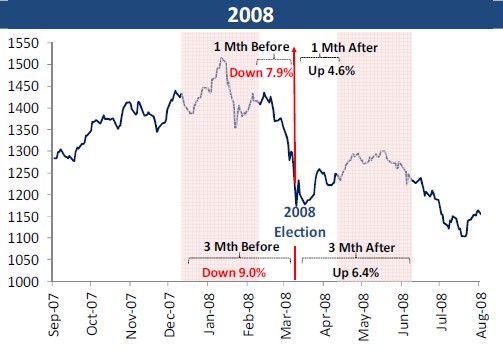
We believe 1H13 will be a choppy period and election concerns could drag down the FBM KLCI by 8% to 10% in the period before market rebounds in the 2H13. The impetus for revival will mainly hinge on the end of election overhang and strong domestic demand.


Sustained monetary easing on the back of low inflationary pressure and attempts to reduce budget deficits by cutting subsidies and channeling the savings to productive ventures are positive despite the short-term impact on earnings. Overall, domestic economy will play an integral role in sustaining confidence in domestic equities next year in the absence of any overwhelming micro drivers.


Corporate earnings for 9M12 were less robust and we forecast full year earnings growth for the FBM KLCI to be 9.4% only. Chances of a strong revival in the immediate-term are minimal based on external sentiment and dwindling demand in key export markets. Our earnings growth forecast of 8% and 8.4% for CY13 and CY14 is not compelling vis-a-vis key regional emerging market's 16.1% and 14.7% respectively. It could come under further pressure if the implementation of minimum wages had greater impact in raising the input cost than the intended increase in disposable income and spending. High likelihood of subsidy cuts (electricity tariff and fuel price increases) post 13th General Election would be negative on earnings and will prompt us to trim our CY13 and CY14 forecasts by 1.2% and 4.9% respectively.


How about Foreign Markets?
External factors will continue to dictate the market directions. The structural flaws cannot be undone overnight but expect bouts of positive improvements to kick in the 2H13 as fats are trimmed and jobs created. China could revive its domestic growth without stoking inflationary pressure but it can be destabilizing factor if its row with Japan escalates. The same applies to Iran and the West.

Can KLCI end Strong this year?
We derived our end-2013 target of 1,710 for FBM KLCI after applying 2008-2011 average forward PER of 14.3x on mid-cycle EPF of 120 sen. The underlying key assumption is that BN will return to power with slim majority. This target is a 5% discount to our bottom-up valuation of 1,800.

FBM KLCI performance before and after 2008 Malaysia's election
Strategy...
Sell-on-strength, especially overvalued defensive plays in the Consumer, Healthcare and Telco sectors and turn cash-heavy to accumulate high beta plays in domestic sectors, which are mainly related to Construction, Oil & Gas and Property sectors, in 1H13. Banking sector holds good buys based on their attractive valuation, still robust loan growth and bright chances of benefiting from ongoing domestic expansions.


Source: TA securities report

Tuesday, 8 January 2013

Understanding Exchange Traded Bond and Sukuk (ETBS)

Today, Malaysia achieve its first milestone in Exchange Traded Sukuk, following the launching of RM300million sukuk by DanaInfra Nasional Bhd. This is the first sukuk for retail investors. When we mention about retail investors, which refer to public, are we ready for this kind of new investment? We should better understand first before jumping onto the ship...


In short, ETBS refers to Exchanged Traded Bond and Sukuk. Generally, bonds/sukuk have always been seen as an asset class to hedge when markets are bearish and a means to develop a steady income over many years. But in the past, these was only accessible to high net worth and institutional investors. Now, with ETBS, all investors can have access to the bond/sukuk market with ease, via the stock market.

What are ETBS ?
ETBS are fixed income securities, also known as bonds or sukuk (syariah compliant bond), that are listed and traded on the stock market. ETBS are issued either by companies or governments (the issuer) to raise funds for their needs. ETBS have varying structures such as fixed rate, floating rate and hybrids.

Why Invest in ETBS ?
Here are some of the reasons to invest in ETBS:

  1. Flexibility and ease of trading on Bursa Malaysia
  2. Transparency, as ETBS are listed on the bourse, investors will have access to real-time prices and volumes, just like shares, with up-to-date information.
  3. Diversification by including ETBS in your portfolio, to complement your investments in other asset classes.
  4. Additional income stream, from the steady income stream through regular coupon payments.


What are the Factors that determine the price of an ETBS ?

  1. Price and Yield
    • It's all about demand and supply in the marketplace. High price, low yield. Low price, high yield. Since the coupon payments for an ETBS are generally fixed to the principal value of the bond, what you pay (price) is crucial to determine the yield.

  2. Interest Rates
    • ETBS is sensitive to interest rates changes. Supposing the average interest rate available to investors goes up, the ETBS' current yield will become a less attractive investment. This would caused a decline in the price of ETBS; until when the yield becomes competitive with prevailing rates. The reverse occurs, if interest rates go down.

  3. Credit Risk
    • Essentially, credit risk is the likelihood that the issuing entity will or will not be able to repay principal amount and its interest element at maturity. As such, corporate ETBS has higher risk than most government ETBS. It was evaluated and rated by rating agencies, such as MARC, RAM, Moody's and S&P. A top rating (AAA) means the ETBS carries the least credit risk (not without risk). Ratings can be upgraded or downgraded, thus, affecting the price.

  4. Maturity
    • Longer maturities have more risk and tend to priced lower (or have higher yields), because of uncertainties in future. Eventually when ETBS start to approach their maturity date, their prices start to get close to the par value.

Please take note that the minimum board lot size for ETBS is 10 units, versus 100 units for shares. You can start trading ETBS simply by opening a CDS account, just like share trading. Happy trading!!!


Source: Bursa Malaysia

Wednesday, 5 December 2012

Falling into a Dividend Trap? (Dec 2012)

No doubt, many investors prefer only invest in dividend-based counters. Malaysia is famous and already been recognized as one of the hottest spot for those looking for high dividend yields counters. But, things may changed. Why?


First, how do we calculate dividend yields? It's dividing the one year dividends declared by share price. Normally, yield which is higher than 5% was considered attractive. Just when everyone looking to hide their money from risks, yet aiming for higher returns than putting into fixed deposit (3% p.a), dividend counters seems to be their preferred selection.

Should we follow the "professionals"?

Yet, many investors just follow the winds (fund managers, analysts, consultants...) to invest based on the past 6 months, 1 year or 2 years track records. Yes. It's proven track records. But, where we are heading to is more important, right?

If you read the newspaper which published out-dated yields data, good luck. It's was based on last year dividends divided by average share price for last 365 days. For me, it's totally irrelevant for us to make decisions.


On the other hand, what we noticed was the share prices of dividend counters had moved up a lot since second half of last year. Although they have come down abit lately, we must ask the following questions before bargain hunting.
  • Are we jumping in too late now?
  • Are we taking more risks now?
Think about it and start to reconsider your decision again.

Personally, I believes this was not the right time to invest in dividend based counters. Nothing to do with their fundamentals or businesses as they are well-manage, profit generating companies. The problem is their share prices have already gone up a lot, which does not justify with the word "attractive yield" currently. Same goes to dividend based local unit trust funds. If really want to search for high dividend investments, you can still find it handy overseas, not Malaysia. Happy Investing!!!

Tuesday, 27 November 2012

ETP update: 10 Key Achievements (Nov 2012)


Below is the 10 key achievements highlighted by CEO of Pemandu, that demonstrates the positive inroads of the ETP:
  1. Projects will be implemented within the 12 focused National Key Economic Areas (NKEA) and also implement 51 Strategic Reform Initiatives (SRI) to ensure competitiveness will flourish.
  2. Whilst Malaysia's GNI per capita was only US$6,700 in 2009, it grew dramatically by 45% in 2011. (Target is US$15,000 by 2020)

  3. GDP grew by 5.3% year-to-date. This is significant, considering Singapore's growth of only 1.3% while neighboring countries recorded the following GDP growth:
    • Thailand 3.0%
    • South Korea 1.6%
    • Taiwan 1.0%
    • Hong Kong 1.3%
  4. Economy continues to grow to reach new GDP and GNI records in 2011, with Government achieved its highest revenue in history with RM185 billion in 2011, allowing the Government to implement many programmes, including those under GTP such as BRIM1 and BRIM2.
  5. Private investment continues to achieve robust growth. As of Sept 2012, private investment grew by 25.5% yoy, reaching a new record of RM112.2 billion.


  6. Domestic private consumption continues healthy growth of 8.2% year to date, an evidence of growing disposable income by Malaysians.
  7. FTSE Bursa Malaysia KLCI market capitalization scaled new historic high on 1st Nov of 1,675.69 points, with market capital Rm1.46 trillion.


  8. Consistent delivery of fiscal deficit reduction from 6.6% of GDP in 2009, 5.6% in 2010, 4.8% in 2011 and further reductions are planned in 2013 and beyond. Debt ceiling was capped at 55% of GDP.


  9. Recognition of Malaysia's tremendous progress by external parties such as World Bank (ranking in Doing Business), AT Kearney's FDI confidence index, IMD World Competitiveness Yearbook, WEF Global Competitiveness and CNN ranked KL as 4th best shopping cities.
  10. Achievements against the KPI were at 123% in 2011 and 94% this year


Source: etp.pemandu.gov.my (summarized by Finance Malaysia blog for ease of reading)

Friday, 19 October 2012

New IPO: Astro Malaysia Holdings

The Return of a Pay TV Giant!!! Astro Malaysia Holdings (AMH) is poised to list on Bursa's Main Market on 19th Oct with a market cap of RM15.6bil. The largest pay-TV operator in Malaysia has a de factor monopoly, commanding a 99% market share. Are you excited, again?


Background

AMH is the leading media entertainment group in Malaysia with 3,100,000 customers and one of the largest in South East Asia. It is primarily engaged in the creation, aggregation and distribution of content over multiple delivery platforms including TV, radio, publications and digital media within Malaysia.

What's the different from the then delisted entity?

Recall that Astro All Asia Networks (AAAN) was the one taken private in 2010 by its single largest shareholder Astro Holdisngs SB. Meanwhile, AMH is effectively the domestic media business arm of previously-listed AAAN.

How good was Astro Malaysia Holdings?
  • A monopoly in the pay TV segment with 99% market share
  • A capital intensive industry, creates a high barrier for new entrants
  • A buffet of content with presently 156 channels of which 68 are home grown channels. The increase in broadcasting capacity to 180SD and 102 HD channels with the launch of Measat-3B in 2014 will help boost ARPU and subscriber base.
  • Multi platform content distribution would enable the group to reach out to more customers

After the good things, let's have a look at some potential risk that AMH may face:
  • The group is subject to extensive regulation with its license subject to renewal;
  • The group’s exclusive satellite rights would end in 2017;
  • Its business is dependent on its infrastructure namely MEASAT-3 and MEASAT-3A and the launch of MEASAT-3B in 2014. Any failure to its existing satellites or delay in launching MEASAT 3B would interrupt its business operations;
  • Competition from incumbent IPTV player such as Hypp TV and the highly anticipated Asian Broadcasting Network could erode its market share. However we foresee this as a longer term threat.
  • Escalating rate of subscriber churn rate may decrease the group’s profitability given the presence of illegal set up boxes in the market such as skybox;
  • Unable to source or procure content at reasonable rates.
  • Its IPTV and OTT services may be affected by disruptions, delays and other difficulties from third-party network and broadband service providers just to list a few.
  • Exposure to foreign currency risk since the purchases of setup boxes, international content cost and transponders lease payments are mainly denominated in USD would impact its operations.


Then, how attractive is the pricing? Is it expensive? Based on different valuation method, below is the fair value given by various research houses:


Source: Various including research report from TA and OSK.

Tuesday, 4 September 2012

New IPO: IGB Reit


IGB REIT comprises of Mid Valley Megamall (retail; 1.72m sf NLA) and the Gardens Mall (retail; 0.82sf NLA) with a total appraised value of RM4.6b. Currently, Mid Valley Megamall is 99.8% occupied and the Gardens Mall is 99.7% occupied. Based on the IPO price of RM1.25, IGB REIT’s market capitalization would be RM4.3bn, making it the largest pure retail M-REITFollowing closely behind IGB REIT in terms of market capitalization size is Pavilion REIT (RM4.08b), Sunway REIT (RM4.02b) and CMMT (RM3.02b).


What are the key selling points for IGB REIT?

  1. Prime asset with strategic location, huge catchment area and well connected transportation networks.


  2. Diverse based of tenants to sustain rental income.

  3. Low gearing provides ample room for acquisition growth. Based on IGB REIT’s Pro Forma Statement of Financial position, IGB REIT’s gearing ratio upon listing will be approximately 25.8%, which is below the average of listed MREITs of approximately 29.2% as at 31 Dec 2011. Hence, for future acquisition, IGB REIT has the flexibility to borrow additional RM1.1bn before reaching the statutory gearing level of 50%.


What's the fair value?
As shown below, different research house gave different fair value by using different method of valuations. To summarize it, the fair values estimated could give investors an upside potential of between 7.2% - 16%. Does this enough for you to consider to subscribe this IPO? Anyway, only 1% of the shares were being allocated to retail investors. Good luck.


Source: Various research report

Monday, 18 June 2012

What is Bursa Malaysia Derivatives Local Participant?

Recently, Bursa Malaysia launched its Derivatives Local Participants Recruitment Drive to have more derivatives traders, so that a more vibrant and dynamic derivatives market can be seen in Malaysia. Anyway, what is it actually? I guess many of us, either yourself or investors or traders, also doesn't know the exact answer...


Again, it's time for Finance Malaysia to do Bursa Malaysia a favor to educate the public. A Local Participant (Locals) is a professional derivatives trader who trades for his/her own account. In essence, a self-employed trader. With the recent easing of entry requirements, those who aspire to be a Local Participant are not required to pass the licensing examination, show the relevant academic qualification and industry experience.

What is the benefits of being a Locals?
Locals have grown alongside the Exchange over the years, both in terms of numbers and trading participation in derivatives products. As a proprietary trader, they have unlimited trading potential. They trade as a business and have the option of working flexi-hours from anywhere. Locals also enjoy exchange fee rebates and tax abatement on their income such as below:


  • A Local Participant will enjoy exchange fee and clearing fee incentives if he trades 1,000 contracts per month or more. 
  • A Local Participant will receive a 50% tax abatement on income derived from derivatives trading.


What are the differences between the current and previous admission requirements of a Local Participant?

Effective 3 January 2012, the following  admission requirements of a Local Participants have been removed :- 

  1. Have passed an examination approved  by BMDB or have  been granted an  exemption in respect thereof; 
  2. Possess such qualification as approved by BMDB; and 
  3. Possess sufficient and relevant trading experience.

In substitution of the above admission requirements, an applicant needs to attend a two-day familiarization programme conducted by BMDB.   


What are the products offered by BMDB for Local Participants?

BMDB offers a range of derivatives products for Local Participants, which include the two (2) key products, namely, Crude Palm Oil Futures ("FCPO") and FTSE Bursa Malaysia KLCI Futures ("FKLI").


Source: www.bursamalaysia.com

Monday, 11 June 2012

IPO: Gas Malaysia

Gas Malaysia Berhad (GMB) was established to sell, market and distribute natural gas and Liquefied Petroleum Gas (LPG). GMB is also responsible for the construction and operation of the Natural Gas Distribution System (NGDS), which is a system comprising 1,800km of gas pipelines and stations within Peninsular Malaysia owned by GMB. NGDS is connected to the Peninsular Gas Utilisation (PGU), which is the gas transmission pipeline across Peninsular Malaysia owned and operated by PGB.


GMB’s core business to sell, market and distribute natural gas to industrial, commercial and residential customers in Peninsular Malaysia via NGDS. In other words, GMB purchases natural gas from PGB and sells to GMB’s own customers at a profit margin. There are currently two players in Peninsular Malaysia’s natural gas distribution industry, comprising GMB and PGB. However, both serve different sets of customers, whereby GMB’s customer base consists of users that initially consume less than 2 MMScfd, whereas PGB supplies to PETRONAS customers consuming more than 2 MMScfd. Customers that initially consume less than 2MMScfd but subsequently increase their consumption exceeding 2MMScfd will remain as GMB’s customers.

Like a toll road?
Looking at it from a slightly different perspective, GMB’s business can be compared to that of PLUS i.e. a toll road operator. Basically, consider GMB’s pipeline infrastructure as a highway, while the “toll” is GMB’s absolute gross margins, i.e RM2.02-2.25, while the “cars” represent the volume of natural gas supplied to GMB’s customers. We believe this comparison is fair, as GMB does not bear the risk of volatile natural gas prices as it buys and sells natural gas at regulated prices. As such, further growth in GMB’s sales volume would further improve its economies of scale given that other costs are largely fixed administrative costs.


In February 2012, GMB signed a New Gas Supply Agreement (NGSA) with Petronas whereby effective from 1 January 2013, the maximum limit for GMB to supply to its customers individually will increase from 2 MMScfd to 5 MMScfd. The NGSA has a 10-year tenure with an option to extend for an additional 5 years. In addition, GMB also supplies LPG to consumers in Peninsular Malaysia.


Strong cash pile, 100% dividend payout for FY12. Management indicated that it will spend RM140-RM150m in FY12 for the expansion of GMB’s Natural Gas Distribution System and RM40m p.a. in both FY13 and FY14 for maintenance purposes. We think that it is possible for CAPEX to be funded internally, judging from the group’s huge cash pile of RM327m and retained earnings of RM360m as of Dec 2011. Besides, GMB is also committed to paying out 100% of its FY12 net earnings as dividends and it is targeting a minimum payout ratio of 75% from FY13 onwards.


Source: TA Securities, OSK Research, RHB Research Institute

Friday, 4 May 2012

Outlook: SELL in May and Go Away? (May 2012)


Lackluster global markets. The Malaysian market sputtered in April after hitting a  record close of 1606.63pts early in the month. It then trended downwards together with most global markets, as political uncertainties in Europe sapped the strength of markets worldwide in the first half of the month, while political uncertainties at home dampened the KLCI in the second half of the month. This was indeed as per our expectations.


Outlook: Sell in May and Go Away?

We investigated the historical index performance over the months of May–Sept and Oct–April for the US and for Malaysia, Jakarta and Hong Kong to try and determine if there was any truth to the old adage. Analysis indicates that over the past 52 years in the US and 22 years in Asia, markets do indeed under-perform more during the months of May–Sept as compared to Oct–April, with the KLCI surprisingly emerging as a high beta market compared to the other three markets.


What goes up must come down
With the  historical trend speaking for itself and global markets performing robustly thus far in 2012, we therefore believe there is a strong risk for markets to retrace in May. Even though Malaysia has under-performed global markets year to date, a global slump may still put a dent in the Malaysian market. As such, we advise the following strategy for the month of May:

  • Sell early in the month with Blue Chips likely being sold down if the global market slumps
  • Buy defensive stocks early in the month, especially in the Mid and Small Cap consumer  space as some stocks here have not rallied in the 1Q
  • If markets come down significantly, ie, the KLCI drops below the 1550pts, then consider accumulating stocks in the Construction, O&G and Banking space on weakness


April Top Buys did well
Considering the 1.6% drop in the KLCI for April, our top Buys did well with 4 out of our Top 5 outperforming the KLCI and also returning a positive return for the month. This was due to our strategy of selectively picking stocks with their own specific catalysts in April. The only disappointment was  MMC that continued to be dampened by rumours of a delay in the IPO for Gas Malaysia.


Start off with defensives in May
With a potential drop in the market in May, we would recommend going defensive over a 1-month time frame. Those with a longer time frame could consider picking up cyclical as the market drops, but we do not have the luxury of that for our monthly outlook. The Top 5 are, therefore, familiar defensive names including telecom companies Axiata and Telekom Malaysia, consumer-related plays AirAsia (which may benefit from lower oil prices) and Media Chinese (benefiting from increased political interest) as well as TASCO, a small logistics company with reasonable dividend yields and a strong track record.


Source: OSK Research report

Monday, 5 March 2012

RHBRI: 4Q11 Earnings Review and Market Strategy


In tandem with the moderating economic growth trend, corporate earnings remained weak in 4Q 2011Of the 113 reported earnings that we cover, 55 of the results (48.7% of the total) were within our expectations, 33 below projections (29.2% of the total) and 25 above forecasts (22.1%) (see Table 1). Against the consensus numbers, 44.2% of the reported earnings were within expectations, 38.1% below and 17.7% above projections (see Table 2). Sequentially, net EPS for the FBM KLCI stocks under our coverage weakened back to +1.7% qoq and +2.8% yoy in the 4Q, from +8.9% qoq and +12.4% yoy in the previous quarter (see Chart 1).


However, the downgrade to upgrade ratio has improved significantly to 1.07 times, from 1.65 times in the previous quarter. Overall, 2011 has been a year where Corporate Malaysia suffered from slowing sales and falling utilisation rates. This, coupled with the trend of higher costs, resulted in falling margins for many companies under our coverage. Consequently, normalised net EPS growth for the FBM KLCI stocks under our coverage slowed sharply from 20.9% in 2010 to +4.7% in 2011. The sharp slowdown in EPS growth, however, partly reflected the higher base effect as well as the plunge in Tenaga’s earnings arising from the gas curtailment issue. Excluding Tenaga, our 2011’s normalised net EPS for the FBM KLCI stocks has slowed down less significantly to +10.1%, from +21.2% in 2010.


Businesses Turning More Upbeat

What’s worth highlighting is that Corporate Malaysia are becoming less pessimistic and expect their business prospects to be stable with prospects of it turning up gradually as the year progresses. Likewise, we expect almost all sectors to record flat or improved earnings in 1Q 2012, with the exception of transport and semiconductor sectors. In our view, earnings of the transportation companies will still likely to be weighed down by slower economic growth and rising fuel costs. Whilst we also expect the semiconductor industry to suffer weak earnings in the 1Q, its outlook should improve from 2Q as cost rationalisation and stronger chip sales will likely translate into a significant improvement in earnings thereafter.

Meanwhile, we have seen more aggressive inventory write-down by companies, particularly amongst the steel product manufacturers. At the same time, banks could have also made pre-emptive provisions for loan impairment. Consequently, barring unforeseen circumstances, the downside risk to corporate earnings may not be as significant moving forward and analysts have turned less pessimistic in their assumptions for earnings projections.


Earnings Revised Up

Overall, we have adjusted some of the assumptions, translating to an upward revision in our 2012’s normalised net EPS growth for the FBM KLCI stocks under our coverage to +12.3% (see Table 3), from +10.3% previously (as reflected in our 2012 Market Outlook & Strategy Report dated 16 December, 2011). Excluding Tenaga, our 2012’s normalised net EPS for the FBM KLCl stocks has also been revised up to 8.8%, from 7.8% two months ago. The upward revisions in earnings were more significant in the oil & gas, consumer and utilities sectors (see Table 4). Similarly, our 2013 earnings estimate for the KLCI benchmark has been tweaked up slightly to 7.9% (+7.0% ex-Tenaga), from +7.3% (+5.5% ex-Tenaga) previously.


General Election Will Create Volatility,
Not Likely To Be A Game Changer

On the local front, a key event that will have significant bearing to the equity market is the impending general election. There are strong market expectations that the country’s general election (due in March 2013) will be held any time soon. Given what happened during the previous general elections on 8 March 2008 where the ruling coalition, Barisan Nasional (BN), lost two-thirds majority, there are fears that if BN were to lose a simple majority, the local bourse could suffer a major temporary setback. This is on account of uncertainty in the continuity of the country’s economic policies that could slow down the implementation of the economic Transformation Programme (ETP). We, however, believe that the likelihood of this happening is low.


Market Strategy :
Buy On Dips With Increasing Focus On Recovery Sectors

Whilst not all the external risk factors have gone away and the impending general election locally could also create uncertainty for the local bourse, the global economic recession risk is receding. Consequently, we are turning more positive on the market. Nevertheless, as fundamentals are just starting to improve, earnings will still need to play catch up for stocks with rich valuations before the market can scale new heights.

Consequently, the risk of a market pullback and consolidation in the near term is still high although we believe that any volatility in the market would provide opportunity for investors to accumulate fundamentally-robust stocks on weakness. We are also turning more positive on cyclical sectors that are poised for recovery, although investors’ risk perceptions can still change very quickly should situation turn out to be worse than expected. As a result, we would still recommend investors to hold some defensive stocks that have strong cash flows to pay sustainable dividends. A list of our top picks is reflected in table below, which includes “buy on weakness” tactical holdings.


Source: RHB Research Institute report